日志
艺术品中的中国茶壶
热度 10 |
2020-5-22

芝加哥美术馆收藏的东方艺术品中,有一尊明代三彩人物雕塑,双手抱着朴实无华的茶壶一把。这把茶壶,如果仍然在世,也应该是一个老古董了。

其实相同式样的茶壶,在乾隆年间制作的一个宫廷茶壶的画片中,也出现过一次,所谓画中有画,壶外有壶。只不过是这一把茶壶,个头儿更大,而且是提梁壶,并有乾隆御制诗为证:
清乾隆 粉彩描金松石绿地开光惠山煮泉观卷图御制诗茶壶
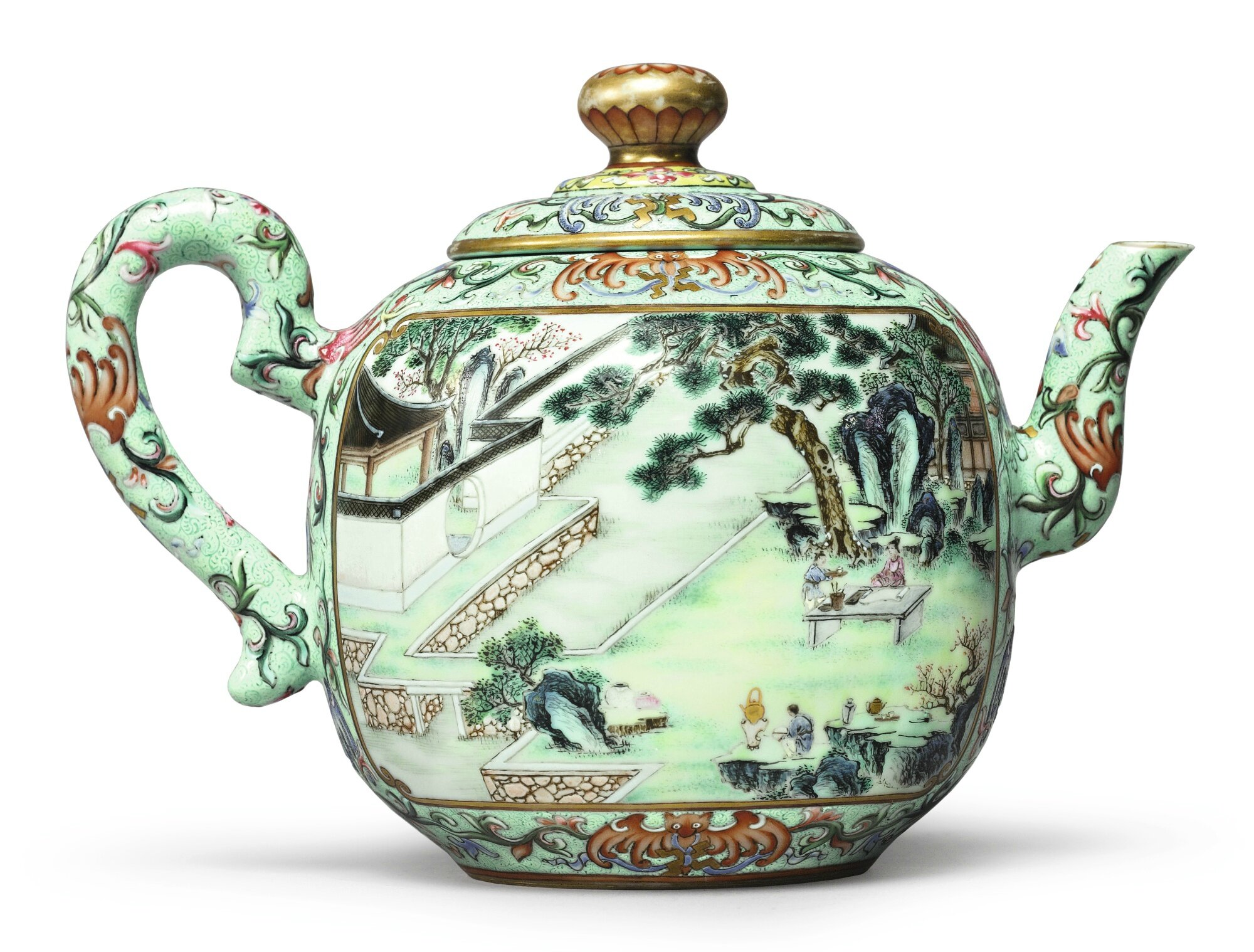
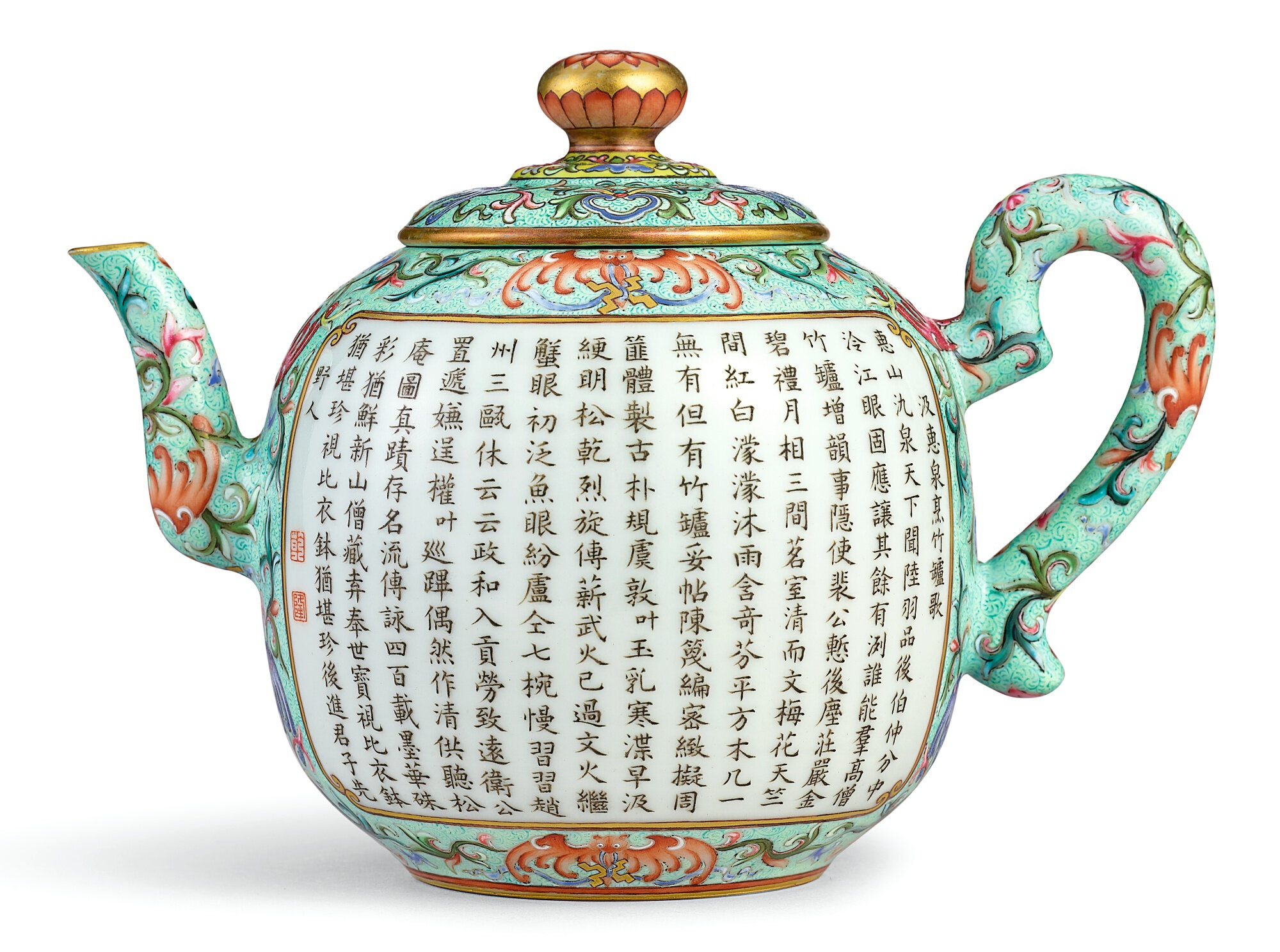
- Formerly in the collection of Mrs Murrell R. Werth. A turquoise-ground famille-rose ‘Hui Mountain Retreat’ teapot and cover, seal mark and period of Qianlong (1736-1795). Length 6 7/8 in., 17.5 cm. Estimate 300,000— 500,000 USD. Sold for 3,490,000 USD at Sotheby’s New York, 13th/14th September 2016, lot 261. Courtesy Sotheby's.
在洛杉矶盖茨美术馆中有一幅名画,是瑞士画家简里奥塔达(Jean-Étienne Liotard,1702-1789)于1782年画的静物。画家简里奥塔达生活的年代,正是中国的康乾盛世,中国生产的外销瓷,通过荷兰的东印度公司,在西方世界横行无阻。
在美术馆对这幅画的介绍中,有如下一段文字:
- Chinese porcelain and tea-drinking were the rage of fashionable Europe when Jean-Étienne Liotard was born. He began painting tea and coffee sets in the last two decades of his life when age, changes in taste, and his political beliefs caused a decline in requests for the pastel portraits that were his specialty. He had, however, been including fruit and porcelain still lifes in some of his portraits since about 1740. Only five of his paintings of tea and coffee sets are known today.
- In this painting of tea-time disarray, a tray is set with six cups and saucers, a teapot, sugar bowl, milk jug, and a lidded vase perhaps containing an extra supply of tea leaves. A large bowl holding a teacup and saucer could also be used for dumping the slops of cold tea and used tea leaves. By the time Liotard painted this work in the late 1700s, tea-drinking had become fashionable among the middle as well as the upper classes. Liotard contrasted the luxurious materials of Chinese porcelain and silver with a cheaper tray of painted tin, known as tôle, that imitated Asian lacquer. Combining the transparent, reflective and brightly-patterned objects allowed the artist to portray strong visual contrasts.
那么简里奥塔达画里的茶具,真的就是康乾盛世生产的外销瓷吗?2015年伊利诺大学香槟分校的一个研究生,专门对此进行了考证,洋洋洒洒写出一篇四十四页的美学硕士论文。作者经过对每个瓷器的仔细观察和比对,说简里奥塔达画里的茶具,应该是来自英国本地一个叫Lowestoft的瓷器生产厂家。
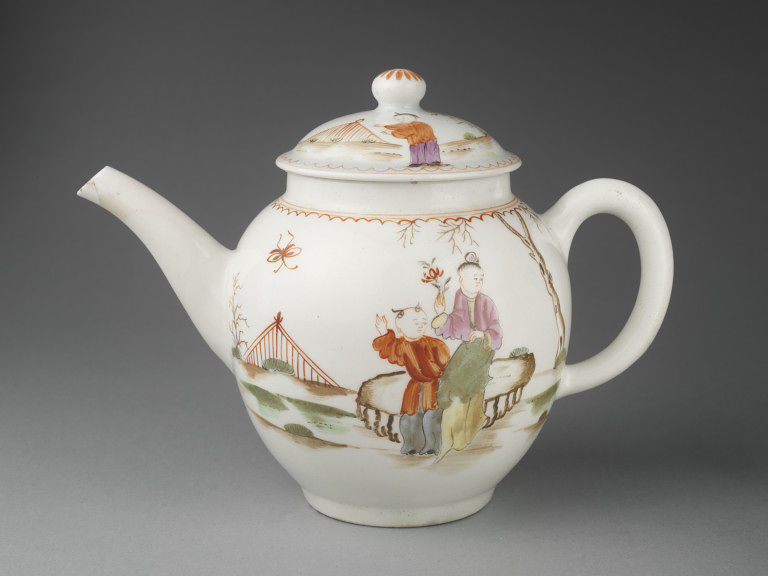
- Lowestoft (porcelain factory), Teapot, English, c. 1785, soft-paste porcelain painted in overglaze enamels,in red, brown, green, crimson and grey with a Chinese woman and boy in a garden, repeated. 15.2cm h., 11.7cm d., Victoria and Albert Museum, London
美国大都市博物馆中的一件藏品,和这把茶壶的形状也很接近,都是Lowestoft生产的。
- The tea service (67.192.1a, b–.16) is an example of "Mandarin" porcelain, painting done in imitation of Chinese export ware with figures in pink, red and blue. It was a style taken from Chinese drawings and used at the Bristol and Worcester factories as well.

- Teapot and cover, soft-paste porcelain painted in enamel colours, made by Lowestoft porcelain factory, England, ca. 1780. Victoria and Albert Museum, London
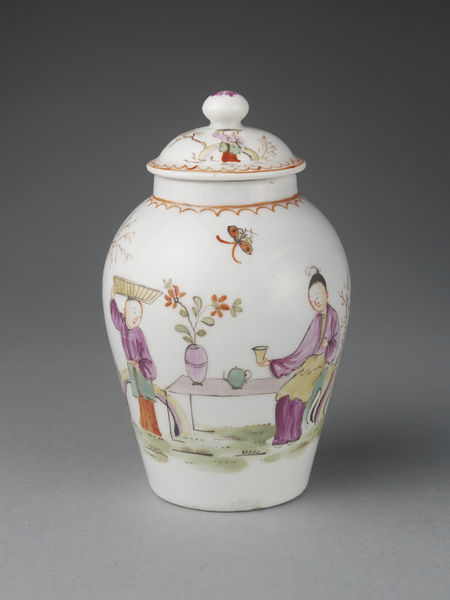
- Lowestoft (porcelain factory), Tea caddy and cover, English, c. 1785, soft-paste porcelain painted in overglaze enamels, in red, pink, green, turquoise, yellow and brown with a Chinese woman drinking tea at a table, a boy, a bird on a tree and butterflies. On the cover, a Chinese boy. Red arch borders. 11.4 cm, Victoria and Albert Museum, London

- Lowestoft (porcelain factory), Slop Basin, English, c. 1785, soft-paste porcelain painted in overglaze enamels, 7cm h., 14.6cm d., Victoria and Albert Museum, London

- Lowestoft (porcelain factory), Cream jug, English, c. 1769, soft-paste porcelain painted in overglaze enamels, 8.9cm h., 7cm d., Victoria and Albert Museum, London

- Lowestoft (porcelain factory), Cup, English, c. 1780, soft-paste porcelain painted in overglaze enamels and gilt, 6.4cm h., 5.7cm d., Victoria and Albert Museum, London
先别说,乍一看这几个被英国瓷器生产山寨了的茶具还真的有那么一点意思。尤其是那把茶壶,仿的和简里奥塔达画中的那把茶壶惟妙惟肖。可是剩下的配套茶具,人物开脸什么的,就不堪恭维了。
美国百科全书和维基百科对英国Lowestoft瓷器工厂的介绍里说,Lowestoft是英国地理位置上最靠东面的一个小岛,17世纪中页因为在小岛上发现了高岭土而一下子就变成英国瓷器生产的一个厂家。可是工厂规模不大,鼎盛时工人总数也不超过70人,从1757年投产到1802年破产,开工仅仅45年。该厂生产的瓷器一般没有商标,有时候盗用德国梅森或者英国罗彻斯特的名字,也有人说从中国进口的瓷器先在Lowestoft添彩,可是没有确切的证据。
- During the early period wares decorated with Chinese-inspired scenes in underglaze blue were produced. This type of decoration continued to form the majority of production throughout the life of the factory but scenes were gradually simplified. Overglaze colours in enamel were used from about 1768, generally in white and blue or in a polychrome that utilizes a bright brick red.
再说简里奥塔达画作中的瓷器,是一整套。瓷器上的画片富丽堂皇,如行云流水,一气呵成,不应该是Lowestoft瓷器工厂后期的作品。因为在1770年以后,随着印花艺术的应用,该瓷器厂的图片,越来越向简约化的方向发展,最后就把自己给玩残了。
- The quality of the porcelain is not the highest, especially after 1770, but even the less polished pieces have the appealling simplicity of folk art, and the high proportion of commemorative pieces, inscribed for people, places or occasions, add to their interest.
英国的Lowestoft瓷器厂应时而生,出产的是软瓷(粘土、氧化硅、和牛骨过磷酸钙)。可是它生于山寨,死于简约,艺术上从来就没有出现过原创的精神,所以也就免不了大浪淘沙昙花一现的悲哀了。


全部作者的其他最新日志
- • 西方爱情诗选 之 我思故我爱
- • 从文自传 之 湘西儒将
- • 千年世家 之 神仙打架
- • 从文自传 之 杀人
- • 灯下漫笔 之 河南匪气
- • 租界里的杂文 之 募捐
发表评论 评论 (6 个评论)
- 回复 smileREGENT
- 最喜欢第一个茶壶样的那个

- 回复 孟词宗
- 简里奥塔达画作中的瓷器上的人物画和Lowestoft瓷器工厂的人物难道不是一种风格的吗?
真正的明清出口瓷上的画风比这个高明得多。不知道怎么在回复里贴图。下面是个讲出口瓷的链接https://www.sohu.com/a/138234042_203478
- 回复 席琳
- 谢谢!山寨和工业化的产物,能做到形似就已经很不错了。西方主流学者们至今认为这是硬瓷和软瓷之间的差别:
孟词宗: 简里奥塔达画作中的瓷器上的人物画和Lowestoft瓷器工厂的人物难道不是一种风格的吗?
真正的明清出口瓷上的画风比这个高明得多。不知道怎么在回复里贴图。下面是 ...
Imported Chinese hard-paste porcelain had begun to be brought into Western Europe in increasing quantities from the early seventeenth century onwards, and rising demand for it across a widening range of social levels eventually led to the establishment of European factories such as Meissen and Vienna about a hundred years later. By the middle of the eighteenth century, English factories were producing less technically challenging soft-paste porcelain to satisfy growing home demand.
- 回复 孟词宗
- 好奇问一下,为啥第一张照片里捧壶的侍女是左衽?照片放反了?
席琳: 谢谢!山寨和工业化的产物,能做到形似就已经很不错了。西方主流学者们至今认为这是硬瓷和软瓷之间的差别:
Imported Chinese hard-paste porcelain had begun t ...