日志
英国瓷场 之 Beech & Hancock
热度 11 |
2020-11-30
家里有一堆旧瓷器,是Beech & Hancock公司生产的北京式样的瓷盘。大小不一,各具特色,大致有三个样式。最小的一个,是两个扎长辫吸烟枪的男同志,在一起断背搭伙过日子,煮茶烧饭的模样。花边是仿制乾隆外销瓷最常见的四瓣花卉图案:

背后的年款,是Pekin B&H,663w字样。

中间不大不小的一款,是妻子和儿子,在小心伺候一个其乐融融刚刚上班回家的人民公仆。花边变成了英文字母H(Home,Sweet Home)和五个蝙蝠和花卉相结合的图案。

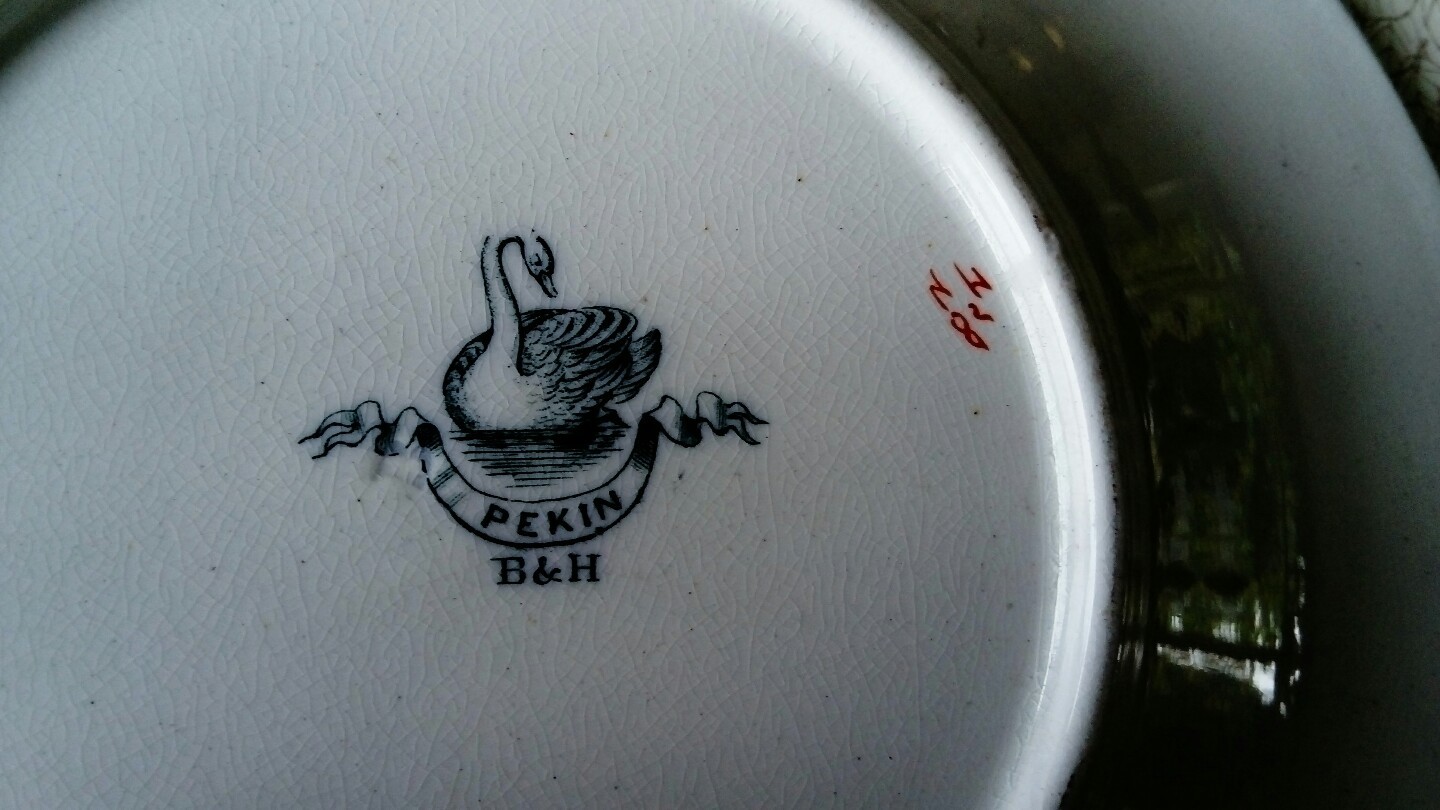
底款是一只游泳的天鹅,Pekin B&H 32D字样。
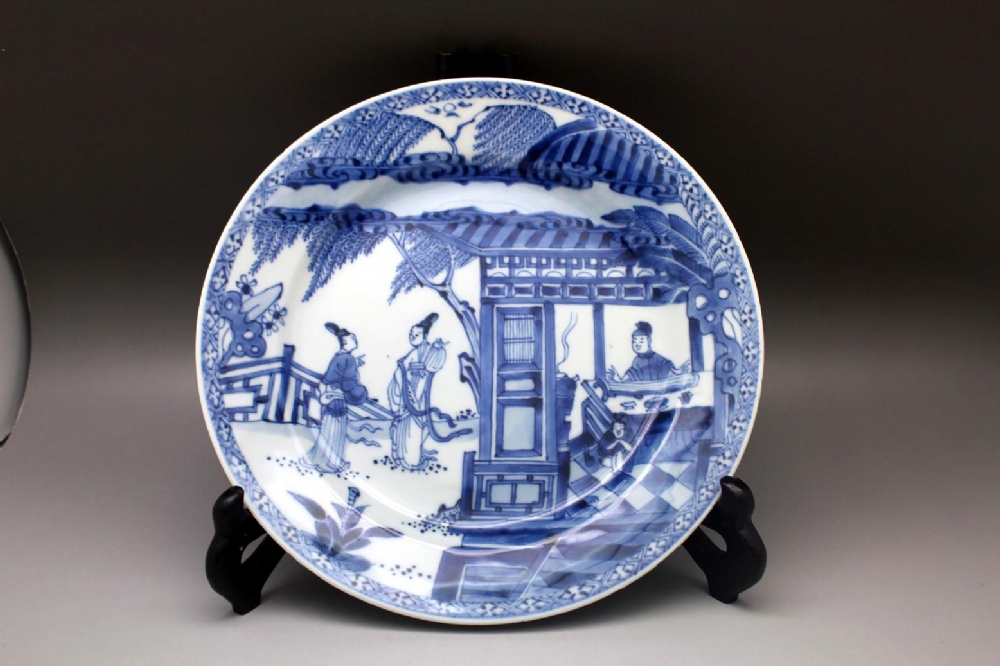
最大的一个瓷盘,也是最老的一个,画片应该是抄自西厢记中的经典听琴桥段:待月西厢下,迎风户半开,隔墙花影动,疑是玉人来。花边是井字符和六幅花卉相结合的图案。
清康熙五彩西厢记听琴图盘画片康熙《西厢记》听琴青花盘画片


底款是一个徽章,里面写明是中国式样L.S.& S. 16210,带有深深的刻款2189,一个分辨不清的嵌刻名字和皇冠的印记。
这是十九世纪中期的英国瓷器,诞生于斯塔福德郡英国瓷都Stoke upon Trent最北边一个叫Tunstall的小镇。公司最早的创始人是英国优秀企业家、小煤窑主Robert Bewsick(1804-1890)。他从1840年开始,买地建厂做瓷器,厂名叫Church Bank Works。因为当时受欧洲中国瓷器销售热的刺激,在出煤又出瓷土的瓷都小镇上,是个人都想开窑场,是个人都想做瓷器。1857到1861年间,工厂仓库保管员Joseph Beech的儿子James Beech(1822-1887)和他的邻居Benjamin Hancock一起,从Robert Bewsick手里获得该瓷器工厂的冠名权,成立了属于自己的Beech, Hancock & Co公司。1862年到1876年间,工厂搬至Tunstall的高街,改名天鹅瓷厂(Swan Pottery, Swan Bank, High Street in Tunstall)。

William Yates’map of North Staffordshire in 1775. The six pottery manufecture towns can be seen running roughly in a line north west to south east with Tunstall furthest north and Longton at the south end.

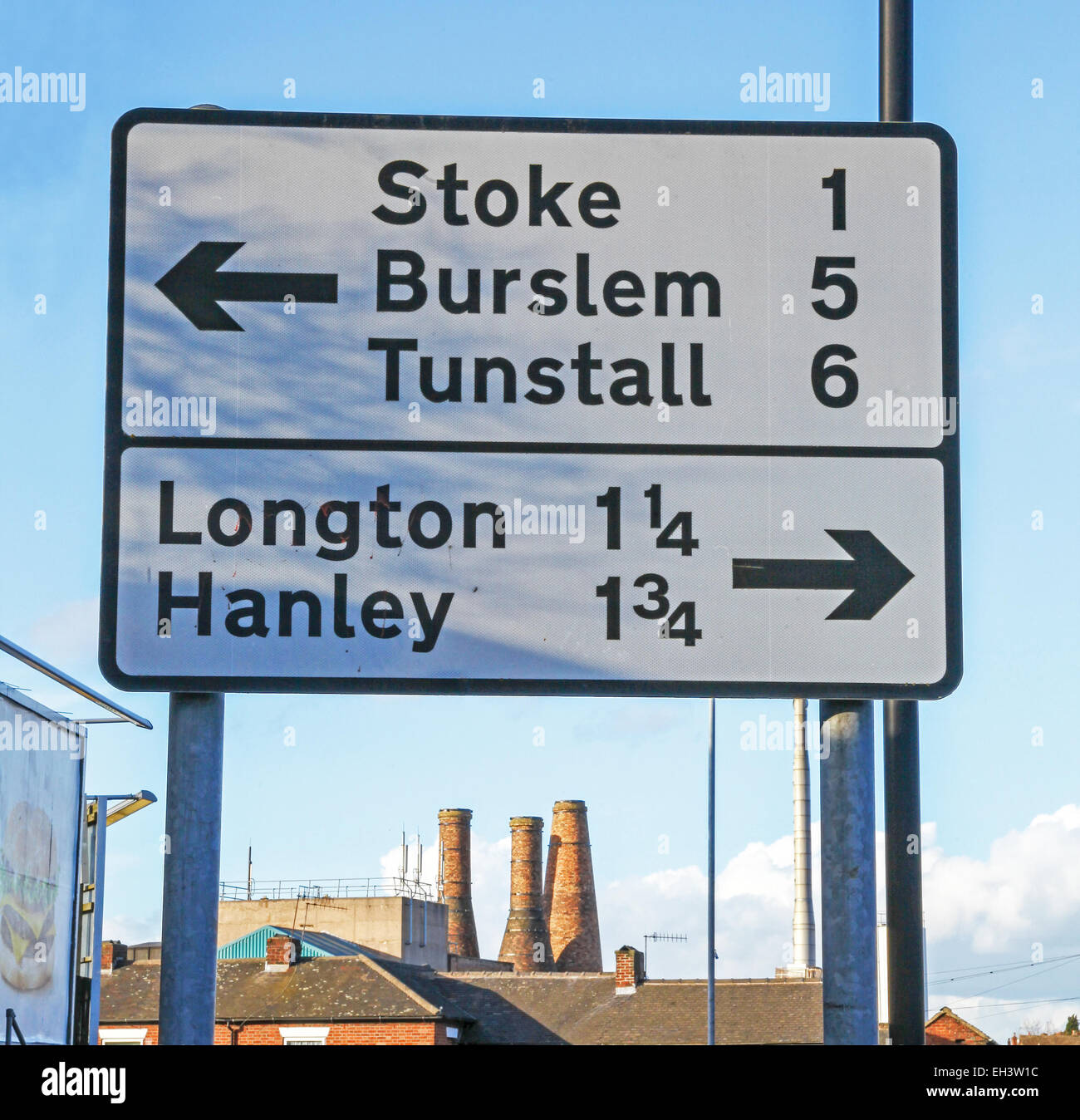
A street sign at Fenton, Stoke upon Trent saying all the other five British pottery towns, Stoke, Burslem, Tunstall, Longton, and Hanley, plus their distances from Fenton
- Robert Bewsick was a Coal Master and Pawnbroker living in Watergate Street Tunstall employing 125 men and boys. He was born in Halliwell, Bolton on 15/8/1804.
- 1840 Robert bought land in Tunstall in partnership with John Leese. They had a potbank called Church Bank Works and leased it in 1857 to various potters including James Beech. 1857 Robert listed as an earthenware manufacturer. 1892 Pottery sold to Thomas Booth. 1891 the coal business was run by two sones Robert and James Wright. 1894 James Wright started his own business in Longton which became John Beswick Pottery. When the Beswick family built a pot bank in Tunstall in 1840, it was to guarantee a market for the output of their coal mines; they leased out the pot bank with coal purchase being part of the contract. In the 1890's James Wright Beswick decided to take a direct hand in the ceramics business, later buying the Gold Street Works in Longton, Staffordshire, the firm's long term home.
- The firm's history is characterised by enterprise. Early on they launched themselves enthusiastically at the popular market producing items in the Victorian taste: highly decorated tableware, jugs, plant-pots, spittoons and figures. They also made reproduction 'antique' Staffordshire figures. With new kilns and modern methods, they could compete keenly on price and as a result, by 1930 they employed 400 people.
- James Beech was a manufacturer of a range of pottery designs for almost forty years.
- In 1851 James Beech formed the partnership Beech Hancock & Co. and production was started at Swan Bank Works which operated from 1851 to 1855 in Burslem. His most prolific period was from 1857 to 1876 in the partnership of Beech & Hancock, operating intially at Church Banks Works in Tunstall (previously used by Robert Beswick) and from 1861 at the Swan Bank Works, also in Tunstall (previously used by E Wedgwood & Co.). The partnership, renamed Beech & Hancock, reopened in about 1857 and operated until 1876, the last six years at another works named the Swan Bank Pottery. From 1861 the mark of the company incorporated a black swan. During this period sponged ware was produced for the home market.
- The partnership broke up in 1876 because in 1860 Benjamin Hancock established his new parternship with William Leigh and James Whittingham as Hancock, Leigh & Co, and in 1862 when William Leigh retired from the business and Sampson Hancock joined the business which continued as Hancock, Whittingham & Co. James Beech continued to manufacture at the same Works until 1889, shortly after his death. James Beech became the sole proprietor of the business in 1877 and operated the Swan Bank Works under his own name from 1877 untill he died in early 1887. The business continued until 1889 when it was taken over by Boulton, Machin & Tennant, who continued to manufacture there.
- James Beech was born in 1822 in Tunstall, the son of Joseph Beech, a wharehouseman, and Mary Cumberlidge. He appears to have been an only child and his mother probably died shortly after his birth. On 19 December 1843 he married Sarah Rhead (born in 1824, the daughter of James Rhead and Anne ?) in Tunstall. Sarah was possibly from the same Rhead family as the designer Charlotte Rhead, but no evidence to support this has yet been established.
- James and Sarah had nine children. His sons Joseph Henry and Alfred appear to have joined the family business, with Alfred employed as a manager. In 1851 the family lived at 32 King Street, Tunstall, next door to a Benjamin Hancock, potter, and possibly James Beech's partner. By 1861 the family had moved to Snow Hill, Burslem. From 1868 to 1873 they lived at Hawthorn House, Porthill. In 1881 they had moved to Well Street, Wolstanton. He died in early 1887 in Tunstall.
也就是说,前面最大的瓷盘应该是1851-1857年所烧;最小的瓷盘是1857-1861年所烧;中间大小带黑天鹅底款的瓷盘,应该是1862年以后烧制的。三个式样的瓷盘,代表了三个不同的烧制时代。也见证了大英帝国瓷器生产短暂而恢弘的250年历史。


全部作者的其他最新日志
- • 西方爱情诗选 之 我思故我爱
- • 从文自传 之 湘西儒将
- • 千年世家 之 神仙打架
- • 从文自传 之 杀人
- • 灯下漫笔 之 河南匪气
- • 租界里的杂文 之 募捐